What are the Cutting Area entries for VIP3015 and VIP4015?
VIP3015 is 3000*1500mm and VIP4015 is 4000*1500mm. They share the 1500-20000W power range, while Max. Acceleration is 1.4G and 1.3G respectively.

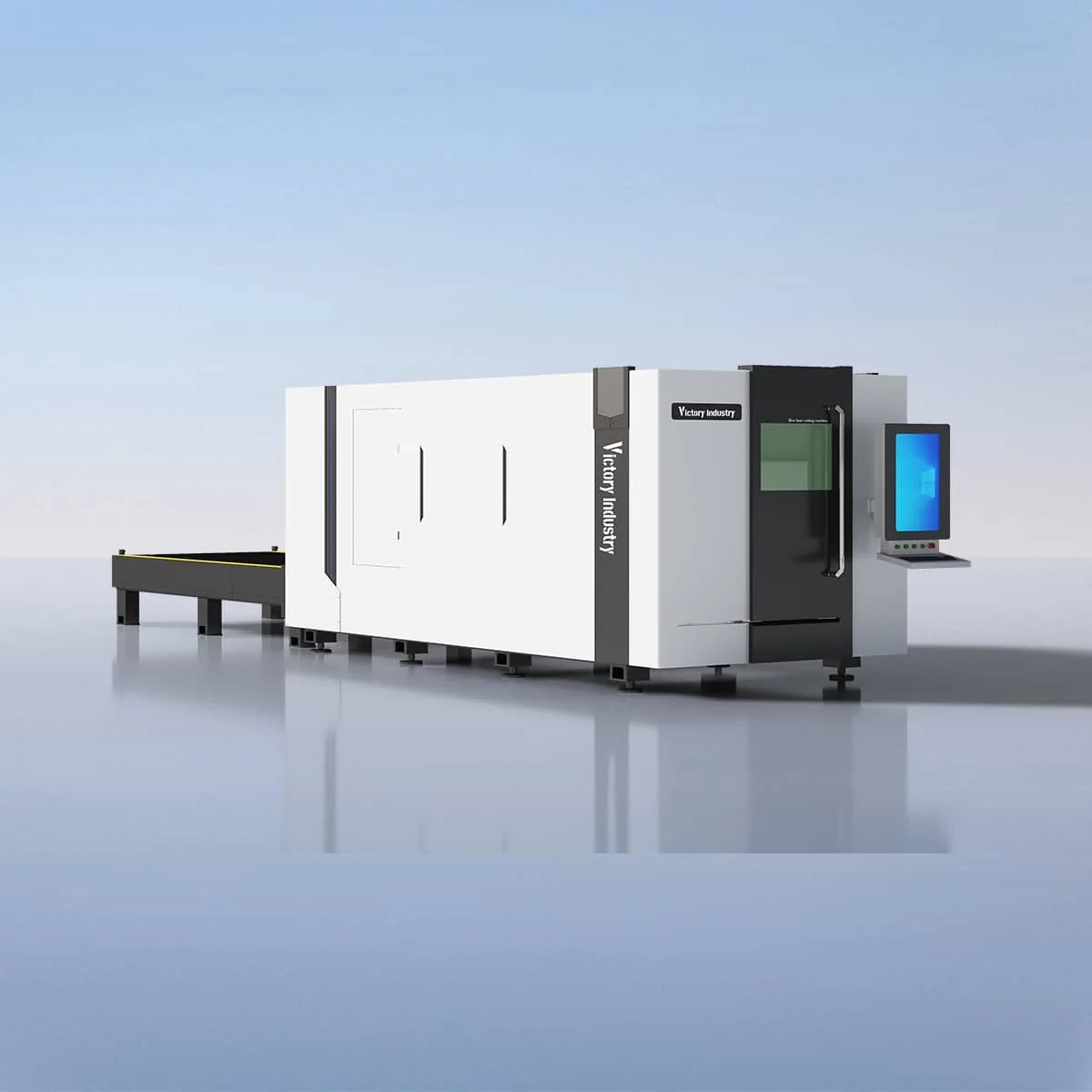
Sheet Laser Cutting Machine
VIP is a sheet and fiber laser cutting machine series with five area choices: VIP3015, VIP4015, VIP4020, VIP6015 and VIP6025. All five share a 1500-20000W Laser Power entry and a Max. Linkage Speed of 140m/min. The chosen area, selected power and motion specification belong on separate lines when you compare the equipment.
Start with the actual sheet format. VIP3015 lists 3000*1500mm and VIP4015 lists 4000*1500mm. VIP4020 changes the second dimension to 2000mm, giving 4000*2000mm. At 6000mm in the first dimension, the choices are VIP6015 at 6000*1500mm and VIP6025 at 6000*2500mm. Retaining those complete entries makes the model comparison precise.
Choose an individual model below to view its complete technical specification. The series overview shows selected parameters for comparison.
There is one model-specific distinction in the acceleration row. VIP3015 has 1.4G Max. Acceleration; VIP4015, VIP4020, VIP6015 and VIP6025 have 1.3G. Carry it across with the model name instead of applying the first column's number to the whole family.
The 140m/min entry describes Max. Linkage Speed. What does that tell a buyer? It gives a shared motion parameter to keep in the specification. It does not give the time for cutting a part, because no particular material, thickness or geometry accompanies it as a cutting test.
Z Axis Travel is 300mm across the models. Positioning Accuracy and Repositioning Accuracy are 0.05mm and 0.03mm respectively. Those labels should survive the move from the source table to a purchase document; an unlabeled accuracy number leaves the reader unable to tell which field is being specified.
A VIP sheet cutting request should make the work identifiable. Attach the current finished-part drawing, then add the material grade, thickness and incoming sheet size. Keep a quantity against the drawing reference. If several parts share a material, their individual features and revisions still need to be visible in the request.
Use the equipment table for the machine comparison and the drawing for the application discussion. If an offer includes an output estimate, keep the part, configuration and handling assumptions with that estimate. This avoids turning the table's shared motion figure into a production promise for every job on the list.
The optical components are a set of selections to resolve. Laser Head lists Raytools, WSX, BOCI and Osprey; Laser Generator lists Raycus, MAX and IPG. A VIP4020 quotation, for example, still needs to identify its power, head and generator. Naming the model gives the area column, but not a fixed combination of those choices.
CypCut and Weihong are listed under Control System. Fuji, Delta and Yaskawa appear in the separate Servo Motor And Driver row. The remaining component fields name Taiwan Linear Rails and Japan Shinbo or France Mortori reducers. Put preferences under those original headings so two offers can be compared on the components they actually select.
Equipment placement needs a layout. Show the sheet approach, proposed machine position and route for finished work; identify existing handling arrangements separately from additional supply requests. Use an itemized description to establish which equipment and accessories are included in the offer. Neither the area entry nor a product photograph defines that complete supply scope.
VIP3015 is 3000*1500mm and VIP4015 is 4000*1500mm. They share the 1500-20000W power range, while Max. Acceleration is 1.4G and 1.3G respectively.
The table calls it Max. Linkage Speed. Keep that label; it does not establish a cutting rate for a specified material, thickness or finished part.
VIP6015 lists 6000*1500mm and VIP6025 lists 6000*2500mm. The second dimension distinguishes those two Cutting Area entries.
No. Raycus, MAX and IPG are listed alternatives across the series. The quoted VIP4020 configuration should state the generator and power being offered.
Provide the drawing revisions, material and thickness, sheet formats and quantities. Include the intended equipment position and distinguish existing handling arrangements from additional supply requests.
Share your material, dimensions and process. Start a conversation about the right configuration.