What distinguishes VIM20FH and VIM30FH?
Their listed laser powers are 20W and 30W. Both belong to the handheld VIM-FH series with the common 1080nm wavelength and published 110*110mm or 200*200mm field choices.

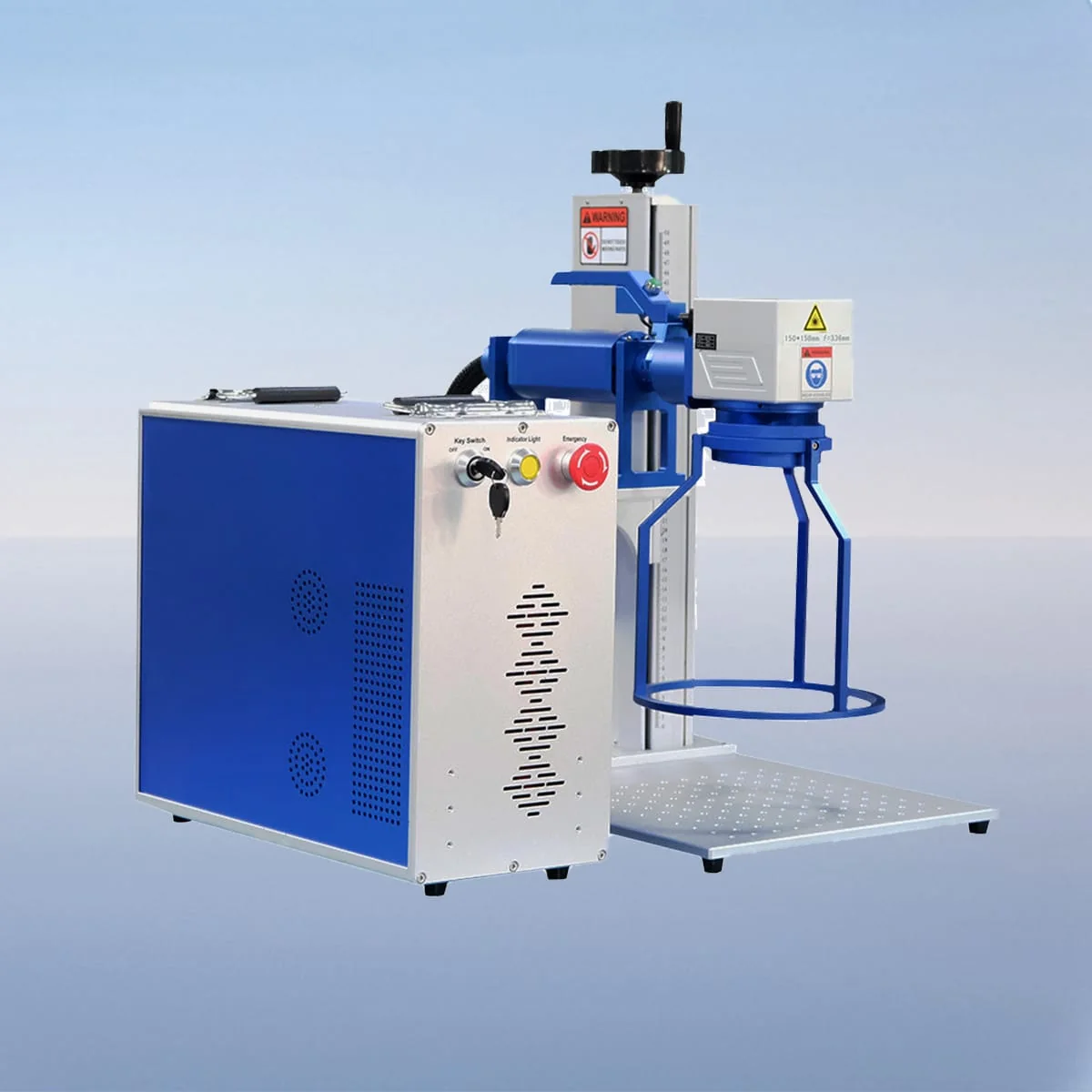
Laser Marking Machine
VIM-FH is a handheld fiber laser marking machine series covering six power models from 20W to 100W. Its published configuration includes a fiber generator, air cooling, galvo scanner and field lens, with a red dot pointer for alignment. The handheld arrangement makes access to the intended marking surface a key part of selection.
VIM20FH and VIM30FH are listed at 20W and 30W. VIM50FH, VIM60FH, VIM70FH and VIM100FH add 50W, 60W, 70W and 100W. The common wavelength is 1080nm, and the table lists 110*110mm and 200*200mm marking fields. Keep the field choice distinct from the complete dimensions of the object.
Choose an individual model below to view its complete technical specification. The series overview shows selected parameters for comparison.
The handheld design describes how the marking equipment is presented to the work. Before deciding that it suits an awkward surface, show the available approach and the surrounding geometry. The source does not establish a permitted curvature, machine weight or universal ability to reach every confined position.
A red dot pointer supplies a visible reference for alignment. The galvo scanner and field lens are separately identified components, while the controls support settings, adjustment and monitoring. A useful setup review uses the actual object and mark location, connecting the positioning discussion to the chosen field and control configuration.
Raycus and IPG are the listed generator options. Minimum line width is stated as 10 Microns and the minimum character dimension as 0.15mm. These values should remain separate from the required finished mark: identify text size, line detail and appearance in the artwork rather than assuming the catalogue fields establish a result on every surface.
The source names metals and plastics, with serial numbers, logos and part identification as example uses. Describe the exact substrate and finish, then show the mark in its intended position. For an identification task, provide the actual content and dimensions, including which parts of the information change between items or jobs.
The overall object may matter as much as the marking patch. Include its dimensions, the surface orientation and any nearby features that restrict access. Explain whether the object remains fixed or can be repositioned. These details let the handheld arrangement be considered against the proposed work without assuming suitability from the word handheld alone.
The listed graphic formats include bmp, jpg, gif, png, tif, ai, dxf, dst and plt. Supply the artwork in a named format at its intended size and keep a location drawing with it. Confirm the chosen field and optical setup when specifying the model so file preparation and physical positioning refer to the same job.
A clean and dust-free or dust-less usage environment is specified. Air cooling and an interlock that stops operation when a protective door or panel opens are described. Obtain the actual operating arrangement and instructions for the offered equipment; the handheld designation does not provide an outdoor rating or certify a particular workstation.
The laser module life field is greater than 100000 hours. It should be read as the published module entry, separately from warranty and maintenance terms. A complete request combines the model, generator and field selection with the object geometry, mark content and the proposed place of use.
Their listed laser powers are 20W and 30W. Both belong to the handheld VIM-FH series with the common 1080nm wavelength and published 110*110mm or 200*200mm field choices.
No universal curvature or access capability is specified here. Show the actual surface and surrounding geometry so the proposed handheld arrangement can be considered for that task.
The source names metals and plastics and gives serial numbers, logos and part identification as uses. The exact substrate, surface finish and required result still need a job-specific review.
Raycus and IPG are named generator options. Supported graphic formats include bmp, jpg, gif, png, tif, ai, dxf, dst and plt; identify the actual file and proposed source in the enquiry.
Provide object dimensions, mark location, surface orientation and nearby obstructions, plus whether the object can move. Include artwork size so physical access and field selection can be considered together.
Share your material, dimensions and process. Start a conversation about the right configuration.