What power choices sit beside VIM60FD?
VIM50FD lists 50W and VIM70FD lists 70W, around the 60W VIM60FD entry. The published wavelength is 1080nm; the power sequence does not establish comparative marking times.

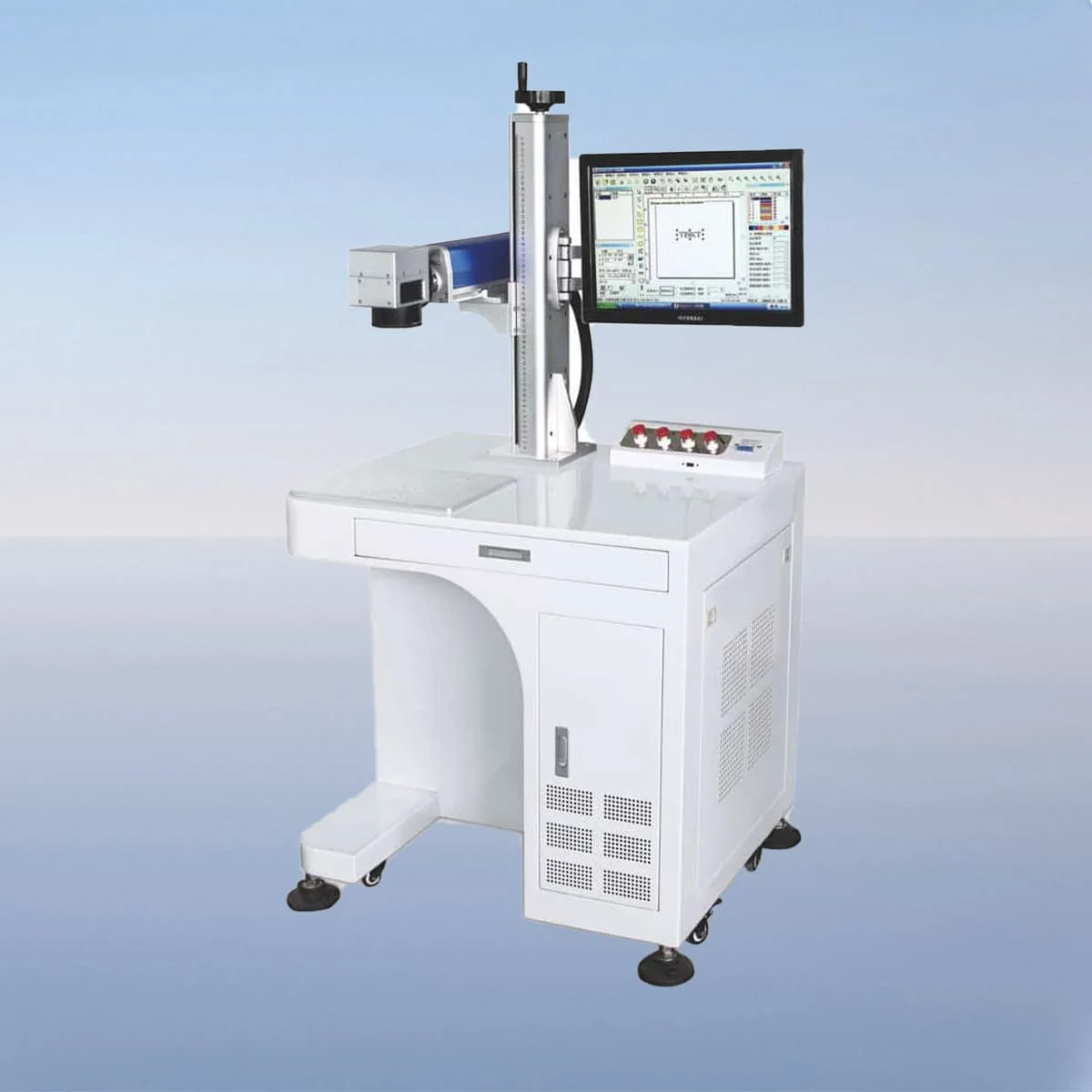
Laser Marking Machine
VIM60FD is the 60W desktop fiber laser marking model in the VIM-FD family, with a published wavelength of 1080nm. It sits between VIM50FD at 50W and VIM70FD at 70W. The model provides a defined power entry for discussing several material or surface requirements without treating them as one identical task.
When more than one component is involved, prepare a separate material-and-surface record for each. Show the graphic and its location beside that record. This is a way to organize a purchasing brief, not a claim that one 60W setup or one parameter choice has been validated across all of the parts.
| Specification | VIM60FD |
|---|---|
| Laser Power | 60W |
| Laser Wavelength | 1080nm |
| Making Range | 110*110mm, 200*200mm |
| Laser Generator | Raycus, IPG |
| Minimum Line Width | 10 Microns |
| Minimum Characters | 0.15mm |
| Usage Environment | Clean and Dust-Free or Dust-Less |
| Graphic Format Supported | bmp, jpg, gif, png, tif, ai, dxf, dst, plt, etc |
| Laser Module Life | >100000 Hours |
Configuration options vary by model. Confirm the final specification, selected components and operating requirements with your quotation.
The desktop arrangement includes a fiber generator, air cooling, a galvo scanner and a field lens. A red dot pointer supplies visible positioning assistance. These components describe the proposed marking system, while the actual lens and source choices should be identified for the configuration under discussion.
The controls allow adjustment of speed, power and frequency. Different job requirements can therefore be discussed in terms of those named settings, but no material-specific recipe or numerical frequency range is supplied here. Keep requested appearance and inspection requirements separate from assumptions about the settings that will achieve them.
The table lists a 10 Microns minimum line width and a 0.15mm minimum character dimension. Neither is a claim about every font or material finish. If fine details matter to your job, identify them explicitly in the artwork rather than treating these two specification fields as the complete acceptance criteria.
Metals, plastics and ceramics are the intended marking materials named in the source. For metal parts, provide the grade and finish; for plastics, identify the actual material rather than only calling it plastic. For ceramics, describe the surface receiving the mark. These are information requests, without adding a tested result or processing recipe.
Where coatings or surface treatments differ, keep those differences visible in the brief even when the graphic is unchanged. State the required appearance for each part and show how it will be supported. The published material scope does not establish that every plastic is suitable or that every finish behaves alike.
VIM60FD lists 110*110mm and 200*200mm marking-range options, with Raycus and IPG named as generator choices. Match the selected optical arrangement to the artwork used in the discussion. The offer should identify its lens, field and source, without implying that both range configurations or both generator brands are supplied together.
The supported-format list includes bmp, jpg, gif, png, tif, ai, dxf, dst and plt. Attach the correct artwork version and dimensions to each material record. That connection is a buyer preparation step; it is not a statement that the offered software automatically maintains a materials database or a version history.
The stated working environment is clean and dust-free or low-dust. The configuration describes a door or panel interlock that stops operation when opened. Request the applicable instructions and protective provisions. The >100000 Hours module-life field is a published specification, not a whole-machine warranty or a measured lifespan for those planned jobs.
VIM50FD lists 50W and VIM70FD lists 70W, around the 60W VIM60FD entry. The published wavelength is 1080nm; the power sequence does not establish comparative marking times.
No part-specific test is established here. Metals, plastics and ceramics are intended source uses. Provide the actual grade, finish and required appearance for each component under discussion.
Keep a separate record for each relevant material or finish, with the artwork, mark location and required appearance. This prevents differences in the workpieces from being hidden within one broad enquiry.
The source describes speed, power and frequency adjustment. It does not supply numerical frequency limits or a ready-made process recipe for any particular material and surface.
The table publishes >100000 Hours under Laser Module Life. Keep that field distinct from warranty coverage, maintenance instructions and any operating-life expectation for the complete machine.
Share your material, dimensions and process. Start a conversation about the right configuration.