Which specifications identify VIM60CS?
The target model is listed at 60W and 10.6 μm. It belongs to the split VIM-CS CO2 family, between the published 40W and 100W power entries.

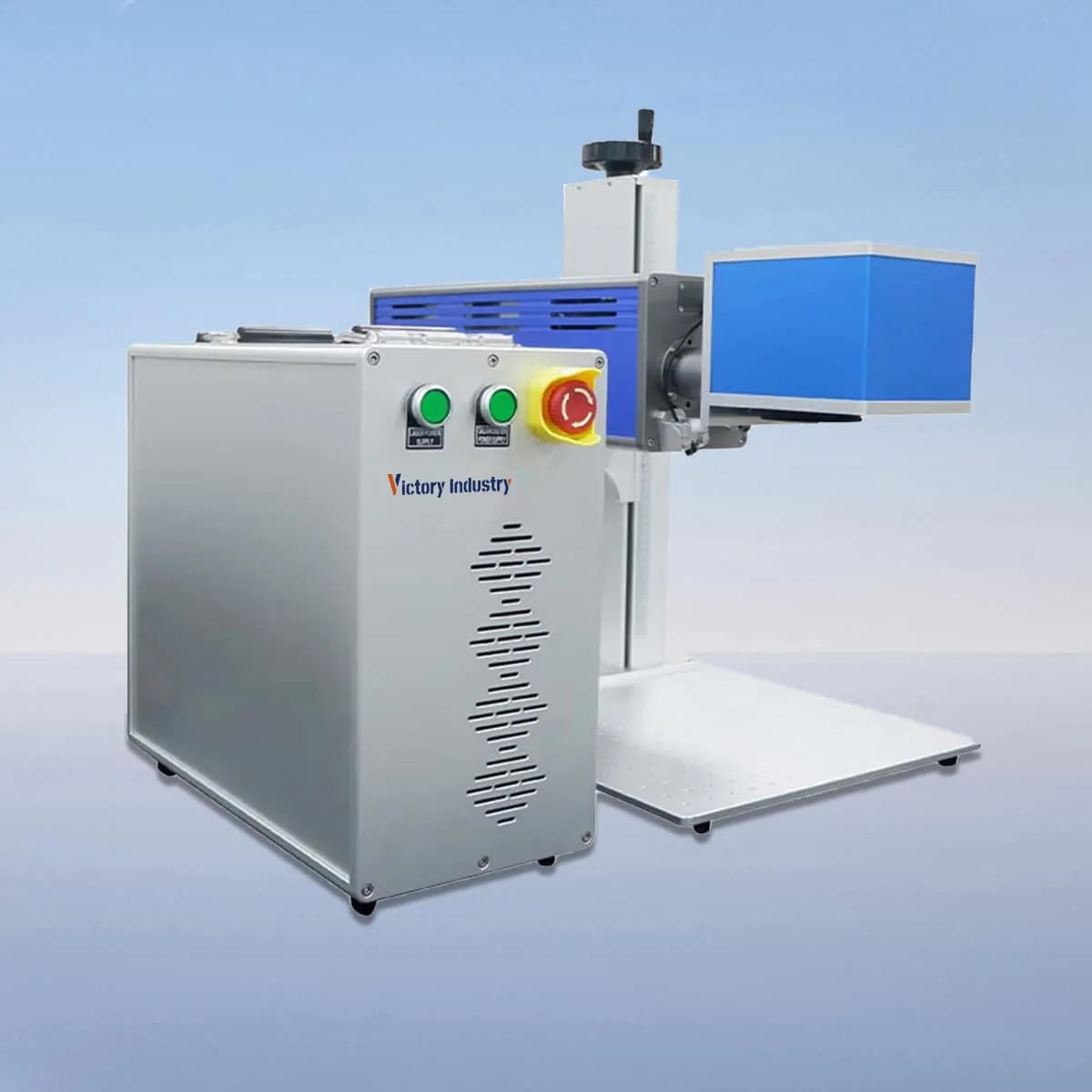
Laser Marking Machine
VIM60CS is the 60W entry in the VIM-CS split CO2 laser marking family, with a listed wavelength of 10.6 μm. It sits between the published 40W VIM40CS and 100W VIM100CS choices. The common CS structure separates the laser source or marking unit from the controls.
A purchasing brief for this model should describe both the mark and the layout around it. Place the proposed marking position and control position on the same drawing as the workpiece support. That makes the split arrangement a practical configuration question instead of an assumption about how far apart the units can be installed.
| Specification | VIM60CS |
|---|---|
| Laser Power | 60W |
| Laser Wavelength | 10.6 μm |
Configuration options vary by model. Confirm the final specification, selected components and operating requirements with your quotation.
The source configuration names a CO2 tube, air cooling, a galvo scanner and a field lens. A red dot pointer gives a visible positioning reference. Ask for the actual optical selection with the offer and provide the graphic dimensions so the discussion concerns the marking arrangement proposed for VIM60CS.
Control functions include settings, adjustments and real-time monitoring. Identify what stays fixed and what changes between jobs: the graphic, its position or the way the component is presented. The offered operating arrangement can then be reviewed against those requirements without assigning an unconfirmed software package or data connection.
The 60W model choice and the selected optics should remain identifiable when comparing quotations. If a 40W or 100W alternative is proposed, use the same material and appearance brief for each. A listed power change does not by itself specify a marking time, a field-size change or a different workpiece capacity.
Plastics, glass and ceramics are named in the series description for marking and engraving. Include the precise material, finish and available marking surface in a VIM60CS enquiry. Where a part has different surface treatments, show which surface receives the mark and define the appearance that needs to be discussed.
The separated units make their placement part of the workstation plan. Show how the part is supported, how its marking face is accessed and where the operator will use the controls. Split design alone does not establish suitability for any particular large or heavy object; the actual dimensions and handling requirements are still needed.
No numerical marking field or minimum character dimension is assigned to VIM60CS on this page. Request the lens and working area in the proposed configuration, using the artwork at its intended size. A red dot reference helps identify a position, but it does not supply an optical field specification.
The described interlock stops machine operation when a safety door or panel opens. Review the supplied operating instructions and the protection around the intended work position. Air cooling is listed as a component, without a continuous run-time value or a claim that every workstation layout meets a particular safety class.
Obtain unit dimensions and connecting details before fixing the installation layout. List any requested supports and accessories separately from the marker and controls. A clear scope identifies the 60W machine, the offered optics and the surrounding items, while leaving no implied cable length or unconfirmed workpiece holding arrangement.
The target model is listed at 60W and 10.6 μm. It belongs to the split VIM-CS CO2 family, between the published 40W and 100W power entries.
The laser source or marking unit is separated from the control unit. Confirm the actual unit dimensions and connecting arrangement for the positions shown in your proposed workstation layout.
No marking-area value follows from the power entry. Request the selected lens and working field and compare them with the dimensions and location of the graphic.
The intended scope names plastics, glass and ceramics. Give the actual grade, finish and marking surface, together with the appearance requirements for the specific part under discussion.
Air cooling is described, but no continuous working duration is assigned here. Ask for the operating requirements and instructions supplied with the actual configuration and planned work position.
Share your material, dimensions and process. Start a conversation about the right configuration.