Is VIM150CF the highest listed VIM-CF power?
Yes. It is listed at 150W, with VIM100CF at 100W as the next lower entry. That ranking concerns power values, not guaranteed production speed or marking results.

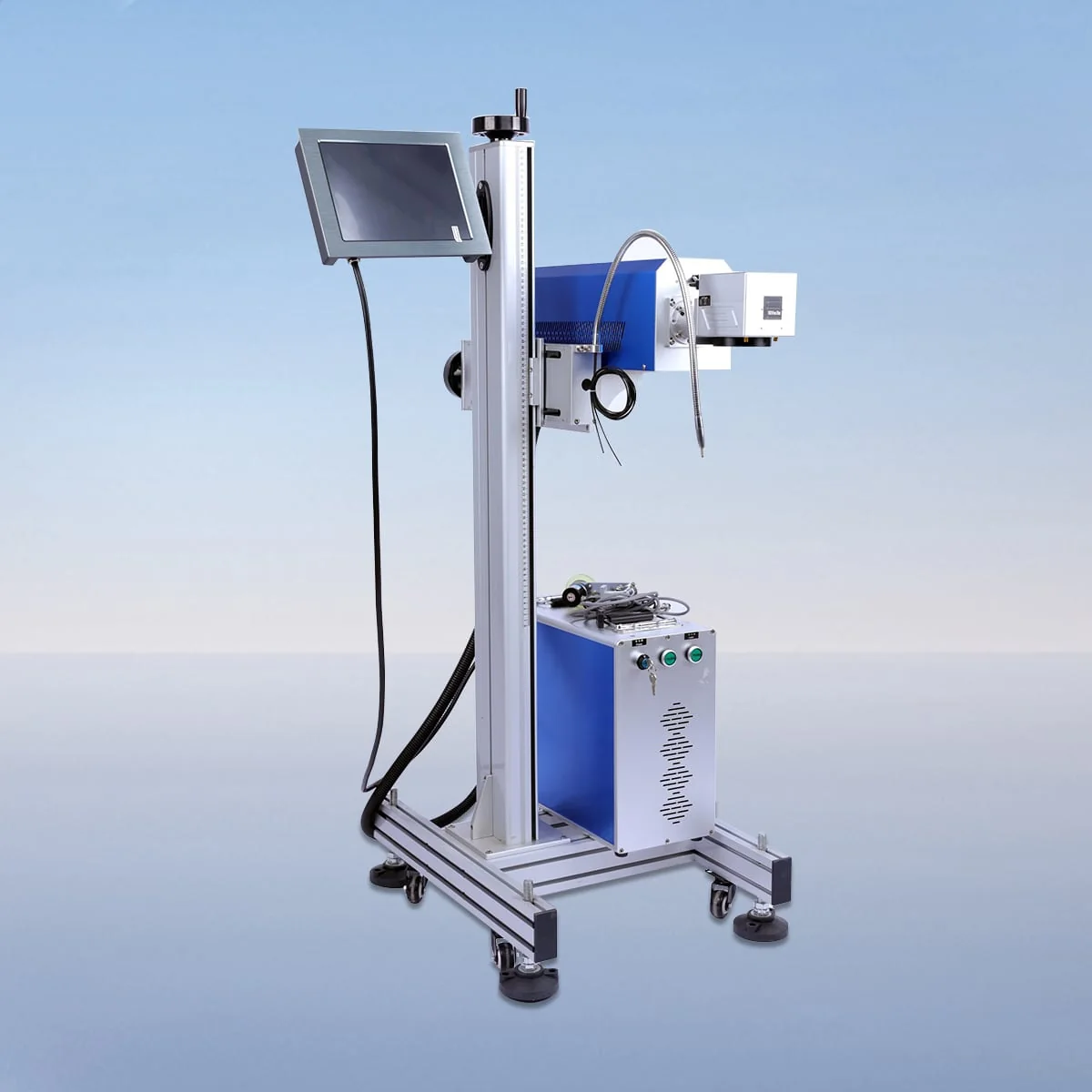
Laser Marking Machine
VIM150CF is the 150W model in the VIM-CF flying CO2 laser marking series. It is the highest power listed in this family, with the same 10.6 μm wavelength shown for the other entries. The configuration is described for marking moving material and workpieces.
Choosing the highest listed power does not establish the highest output for a particular job. The artwork, substrate and required product movement still define the task to be discussed. Present those requirements with the intended marking position so the 150W choice can be reviewed as part of an actual line arrangement.
| Specification | VIM150CF |
|---|---|
| Laser Power | 150W |
| Laser Wavelength | 10.6 μm |
Configuration options vary by model. Confirm the final specification, selected components and operating requirements with your quotation.
The common equipment description includes a CO2 tube, air cooling, a galvo scanner and a field lens. A red dot pointer provides visible positioning. The field and optical configuration should be identified in the proposal, with the mark dimensions and intended location on the workpiece available for the setup discussion.
VIM100CF at 100W is the next lower entry in the family table. If it is an alternative under consideration, request complete configurations for both models using the same job information. A power comparison should not conceal different fields, optics or installation assumptions in the two proposals.
The controls support parameter settings, adjustment and real-time monitoring. Explain the content to be marked and how it changes between jobs. This creates a practical basis for reviewing the offered system without treating the control description as evidence of a specific software brand or automatic line interface.
The CO2 tube configuration identifies wood, acrylic and glass as marking and engraving applications. For VIM150CF, state the actual substrate, surface treatment and appearance required. The material scope describes intended use; it does not establish a finished result for every grade, coating or product carrying the mark.
Show the product's direction of travel, spacing and orientation at the proposed marking point. Include the location of the graphic and the space available for access. If the line already exists, identify the constraints that must remain unchanged. The flying designation does not establish a particular speed or guarantee compatibility with an arbitrary handling arrangement.
No marking-area value, character-size limit or software brand is assigned here. Ask for the actual field, optics and control configuration accompanying the proposed 150W machine. Keep those choices separate from the complete product dimensions and the surrounding equipment layout, which describe different installation requirements.
Air cooling is described, together with an interlock that stops operation when a safety door or panel opens. Obtain the offered equipment's operating instructions and review its protective arrangement within the intended installation. These components do not specify continuous running time or certify the complete production line.
The enquiry should distinguish the marker itself from requested supports, conveyors or other accessories. Attach the artwork and line drawing on clear revisions, and record the required supplied scope. This gives the VIM150CF selection a concrete basis: a defined power model, a particular marking task and an installation arrangement to be confirmed.
Yes. It is listed at 150W, with VIM100CF at 100W as the next lower entry. That ranking concerns power values, not guaranteed production speed or marking results.
The published wavelength is 10.6 μm, shared across the VIM-CF family. The separate 150W field identifies this model's laser power entry.
The source describes marking moving materials or workpieces. It does not assign a line speed or establish that a conveyor and the surrounding handling equipment are supplied.
Wood, acrylic and glass are named for marking and engraving. Provide the exact substrate and surface finish with the required mark so the proposed task can be discussed specifically.
Include artwork, material, mark dimensions and position, plus product movement and line-layout information. Request the field, optics and controls explicitly and identify any handling accessories separately.
Share your material, dimensions and process. Start a conversation about the right configuration.