What working rectangle is listed for VIC1610F?
The working area is 1600*1000mm. Check both dimensions with the layout in its intended orientation.

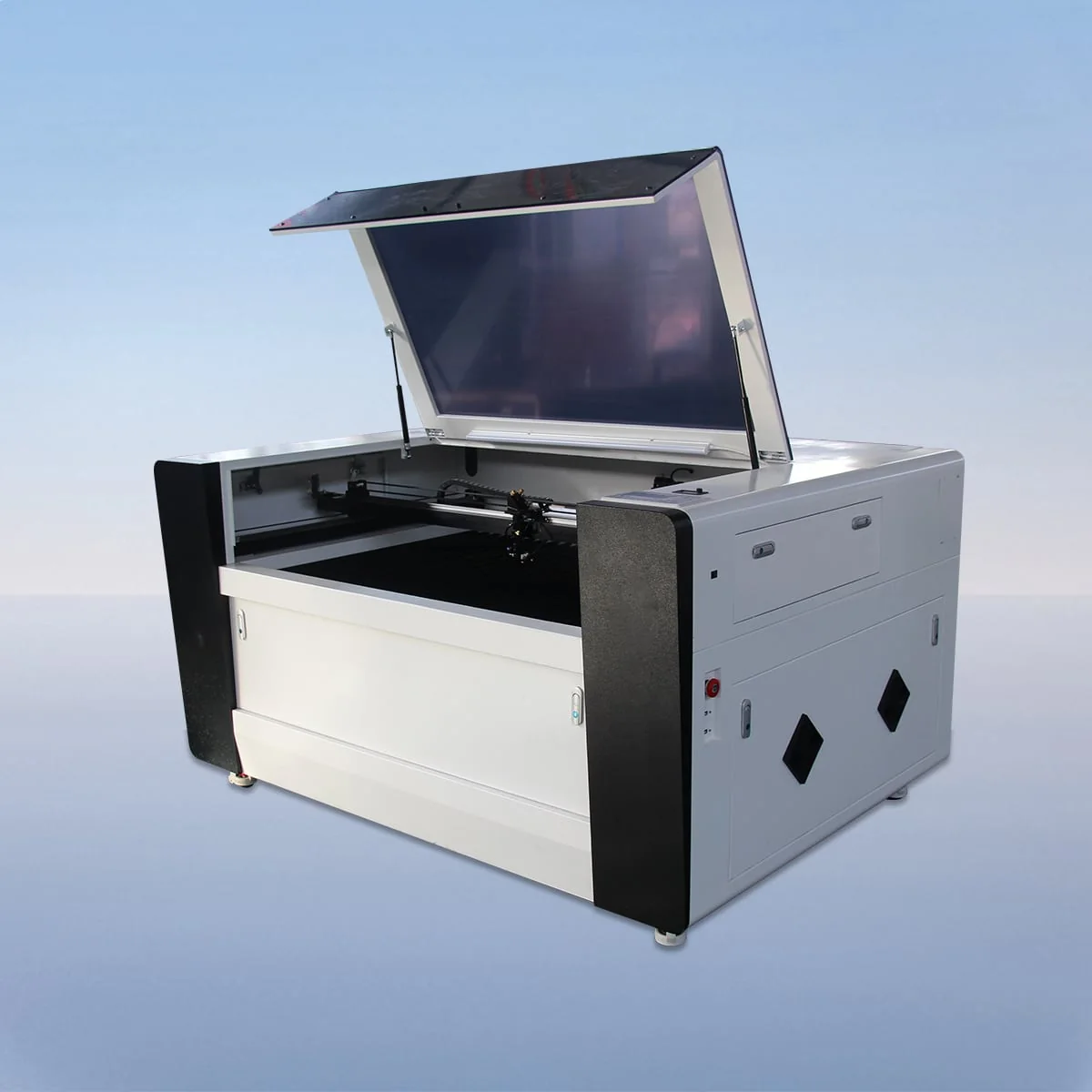
Laser Cutting Machine
VIC1610F has a 1600*1000mm working area in the VIC-F CO2 laser cutting range. The family description includes a fully enclosed cutting area and equipment structure comprising a CO2 head and tube, linear guides, stepper motors and belt drive. The technical table lists an 80-600W power range.
The proportions of this rectangle are useful to compare with other family sizes when the blank has a required orientation. Keep that orientation visible in the enquiry. A drawing rotated to fit another rectangle may represent a different setup from the one your material or handling plan actually allows.
| Specification | VIC1610F |
|---|---|
| Working Area | 1600*1000mm |
| Laser Type | CO2 Laser |
| Working Table | Knife Table or Honeycomb Table |
| Laser Power | 80-600W |
| Power Supply | 220V/50HZ, 110V/60HZ |
| Min Line Width | ≤0.15mm |
| Position Accuracy | 0.01mm |
| Repetition Accuracy | 0.02mm |
| Cutting Speed | 150mm/s |
| Control System | Ruida (USB Interface) |
| Graphic Format Support | PLT, DXF, BMP, JPG, AI, etc |
Configuration options vary by model. Confirm the final specification, selected components and operating requirements with your quotation.
The VIC1610F working area is 1600*1000mm, while VIC1318F lists 1300*1800mm. The latter is longer in the second listed dimension but shorter in the first. Compare both pairs against the actual layout. Neither one is a substitute for the external dimensions or access-opening information needed to plan the installation.
The cutting area is described as fully enclosed. If the blank must be introduced in a particular orientation, include that requirement and ask for the proposed access arrangement. The structure description does not establish a loading method or a clearance figure, so those details should remain explicit questions for the offered equipment.
Knife or honeycomb tables are listed as alternatives. The configuration narrative describes aluminum blades for the knife-table arrangement. Identify the preferred support surface and ask how the proposed blank would be placed on it. Do not assume that both tables are supplied or that an unspecified support arrangement has already been assessed.
Describe the proposed material grade and thickness together with the finished geometry. Mark any orientation that must remain fixed, and explain the dimensional or visual result required. These details establish the question for review; the model's area and enclosure alone do not demonstrate suitability for an unspecified material or part.
Suppose a layout fits one working rectangle only when turned through a different orientation. Provide both the required orientation and the reason it matters, rather than sending only the rotated image. Ask for the worktable and access arrangement to be reviewed against the permitted setup before choosing a model from the size table.
Ruida control with a USB interface is listed, with PLT, DXF, BMP, JPG and AI in the graphic format list. Give the drawing units, scale and revision. Where orientation matters, add an identifiable reference edge or direction to the drawing so the configuration discussion does not depend on an unannotated preview.
The supply entries are 220V/50HZ and 110V/60HZ. State the available supply and request the selected version together with the proposed laser power. The table's range does not identify the rating of one offered machine until that choice is recorded. Have the selected worktable included in the same configuration schedule.
Position Accuracy is 0.01mm, Repetition Accuracy is 0.02mm and Cutting Speed is 150mm/s in the published table. Keep these fields distinct from the finished-part requirements and any target job time. Attach those requirements to the actual material, drawing revision and orientation so the proposed equipment is discussed on a consistent basis.
The working area is 1600*1000mm. Check both dimensions with the layout in its intended orientation.
It lists 1300*1800mm. Its first dimension is shorter and its second longer than VIC1610F, so compare the actual shape of the layout.
No numerical clearance is supplied by that description. Explain how the blank needs to enter the proposed setup and request the relevant dimensions.
The knife-table configuration is described with aluminum blades. Knife or honeycomb alternatives are listed; confirm the selected surface in the offer.
Send the complete layout, reference edge, material and thickness, and explain which orientation is permitted. Include the required result and relevant access questions with that drawing.
Share your material, dimensions and process. Start a conversation about the right configuration.