How large is the VIC9060D working area?
It is listed as 900*600mm. Keep the blank outline and intended orientation visible when comparing it with the working area.

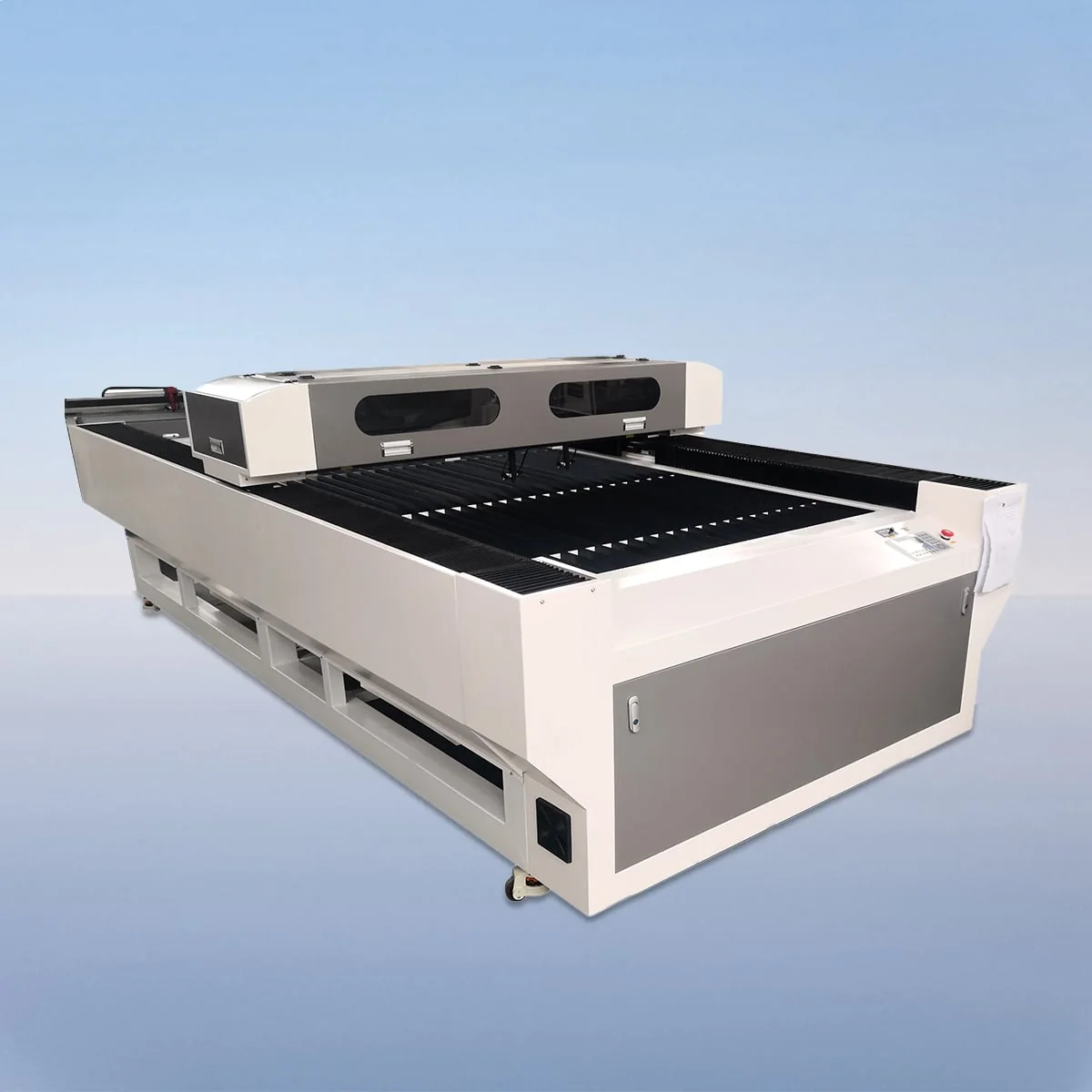
Laser Cutting Machine
VIC9060D has a 900*600mm working area and belongs to the VIC-D CO2 laser cutting family. Two laser cutting heads operating simultaneously are described for this series. Its published equipment structure also includes a CO2 tube, linear guides, stepper motors and belt drive, with an 80-600W power range in the table.
This model sits between VIC6040D and VIC1390D in the listed working-area choices. Use that comparison to examine the size of the incoming material and the layout you intend to cut. Choosing by the finished part alone can leave the surrounding blank and the proposed two-head arrangement out of the discussion.
| Specification | VIC9060D |
|---|---|
| Working Area | 900*600mm |
| Laser Type | CO2 Laser |
| Working Table | Knife Table or Honeycomb Table |
| Laser Power | 80-600W |
| Power Supply | 220V/50HZ, 110V/60HZ |
| Min Line Width | ≤0.15mm |
| Position Accuracy | 0.01mm |
| Repetition Accuracy | 0.02mm |
| Cutting Speed | 150mm/s |
| Control System | Ruida (USB Interface) |
| Graphic Format Support | PLT, DXF, BMP, JPG, AI, etc |
Configuration options vary by model. Confirm the final specification, selected components and operating requirements with your quotation.
Compare the VIC9060D working area of 900*600mm with 600*400mm for VIC6040D and 1300*900mm for VIC1390D. Put the same layout beside all three rectangles, keeping its orientation visible. A larger table entry alone does not establish how many usable parts can be processed in a cycle.
The VIC9060D dual laser heads should be discussed in terms of the paths needed for your drawing. Simultaneous operation is stated, but head spacing, independent power and a specific throughput increase are not quantified. Ask how the proposed equipment would handle the arrangement before assigning a production target to it.
The published table presents knife and honeycomb worktables as alternatives. The configuration narrative describes aluminum blades for the knife-table arrangement. State the preferred support surface in the enquiry and have the offer identify the selected version. The optional red dot pointer is a separate choice for visible material positioning.
Acrylic, wood, paper and rubber appear in the source as examples within the family's non-metallic cutting scope. Name the exact material being considered and its thickness. Include any required appearance of the cut or engraved area; the material list does not provide a tested setting or finished-quality limit for that request.
Suppose a procurement team is comparing three table sizes for a set of recurring parts. Send a representative drawing for each part and one proposed combined layout. Distinguish regular work from occasional larger blanks, then ask which layout and head arrangement the equipment proposal addresses. This makes the comparison specific without assuming identical productivity.
Ruida control and a USB interface are listed for the family. PLT, DXF, BMP, JPG and AI are among the supported formats. Identify units, scale and file revision when sending artwork. If several layouts are being compared, label them clearly so that a quotation cannot be mistaken for an assessment of every alternative.
Choose the proposed laser power within the published 80-600W range and identify the installation supply. The specification table gives 220V/50HZ and 110V/60HZ entries; it does not describe automatic switching between them. Request a configuration schedule that brings together supply, laser selection, worktable and any requested positioning option.
The listed 150mm/s Cutting Speed is separate from a complete job cycle. Position Accuracy is 0.01mm and Repetition Accuracy is 0.02mm, also separate from the tolerance required on a finished component. State those acceptance requirements in the enquiry, with the drawing and material to which they apply.
It is listed as 900*600mm. Keep the blank outline and intended orientation visible when comparing it with the working area.
VIC6040D lists 600*400mm and VIC1390D lists 1300*900mm. They provide useful same-family comparisons for a defined layout.
The source does not specify independent power control. It describes simultaneous operation and lists the family power range; ask for the proposed arrangement explicitly.
Knife or honeycomb tables are listed. Aluminum blades are described for the knife-table configuration; the selected table should be named in the offer.
Give each layout its own revision or identifier, with material, thickness, orientation and required result. Indicate which work is regular and which is occasional.
Share your material, dimensions and process. Start a conversation about the right configuration.