What is the VIC6040D working area?
The table lists 600*400mm. Check the incoming blank and complete part layout against both dimensions, rather than checking only the finished component.

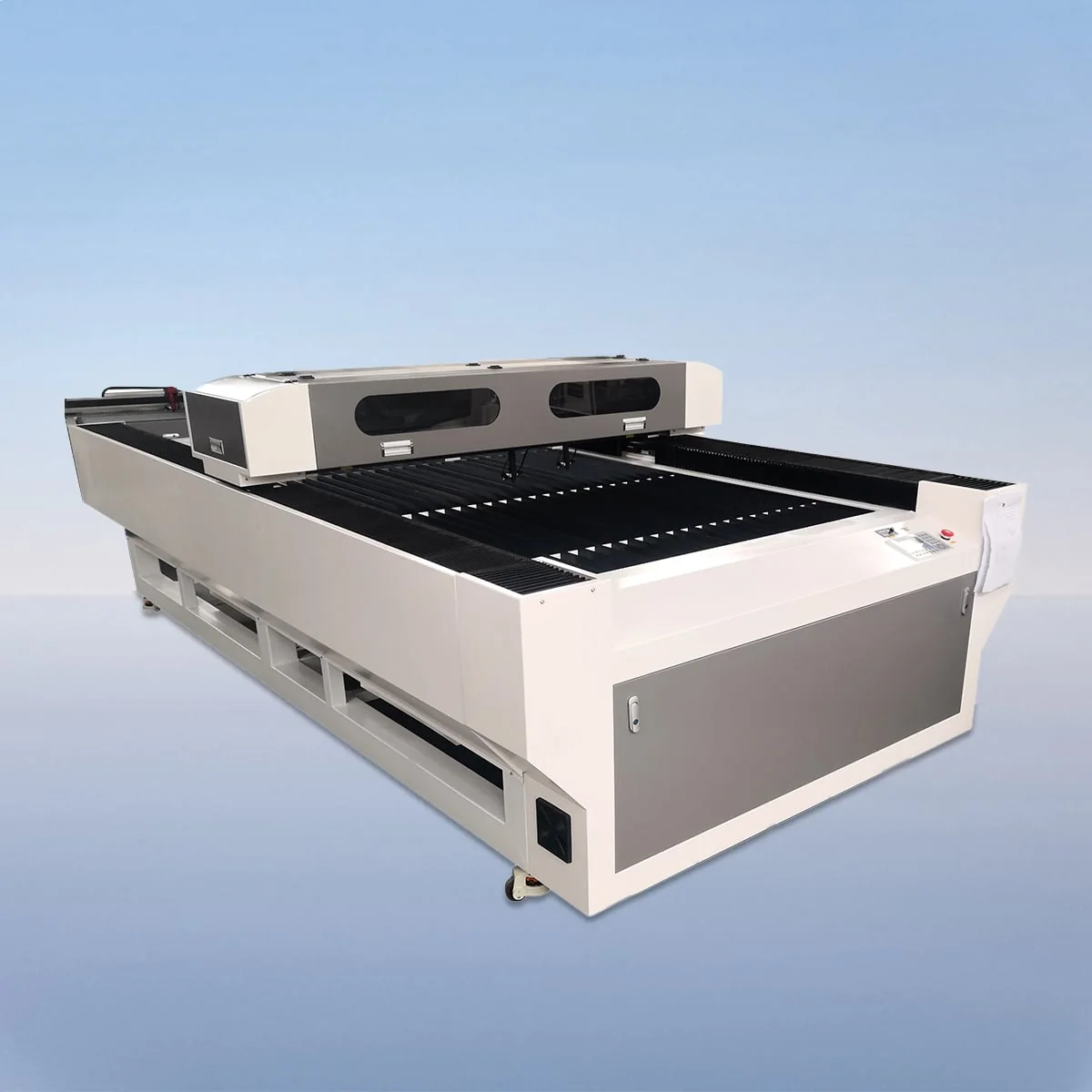
Laser Cutting Machine
VIC6040D is a CO2 laser cutting model with a published working area of 600*400mm. The VIC-D family description identifies two laser cutting heads that work simultaneously, together with a CO2 tube, linear guides, stepper motors and belt drive. The specification table lists laser power from 80-600W.
Begin selection with the blank that will actually go onto the table. Its outline may differ from the finished component, particularly when several components share one layout. Send both dimensions with your drawing, and explain how you expect the two heads to be used before treating the model as suitable for the job.
| Specification | VIC6040D |
|---|---|
| Working Area | 600*400mm |
| Laser Type | CO2 Laser |
| Working Table | Knife Table or Honeycomb Table |
| Laser Power | 80-600W |
| Power Supply | 220V/50HZ, 110V/60HZ |
| Min Line Width | ≤0.15mm |
| Position Accuracy | 0.01mm |
| Repetition Accuracy | 0.02mm |
| Cutting Speed | 150mm/s |
| Control System | Ruida (USB Interface) |
| Graphic Format Support | PLT, DXF, BMP, JPG, AI, etc |
Configuration options vary by model. Confirm the final specification, selected components and operating requirements with your quotation.
The VIC6040D working area is the 600mm by 400mm entry in a seven-model table. VIC9060D, the next listed model, has a 900*600mm area. Compare the complete proposed layout with each rectangle. These are working-area dimensions; a floor plan also needs the external machine dimensions and access arrangement confirmed separately.
The dual-head description establishes simultaneous operation, but gives no numerical head-spacing range or allocation of the work area between heads. Ask for the proposed layout to be reviewed against the actual head arrangement. Do not assume that two heads double the listed working area or guarantee twice the output for a particular drawing.
The configuration description includes an aluminum blade worktable, while the table offers knife or honeycomb alternatives. Choose the support arrangement as part of the quotation. A red dot pointer is an optional positioning aid that projects a visible point onto the material; have its inclusion stated if you require it.
The source positions VIC-D for non-metallic cutting and names acrylic, wood, paper and rubber. These are material examples rather than a thickness chart. Specify the actual material grade and thickness, together with the edge or engraving result you need, so that the equipment discussion refers to a defined task.
Imagine a buyer arranging repeated small shapes on one blank. Provide the individual outline and the complete layout, and mark the intended reference edge. Ask how both heads would handle that arrangement. If the plan depends on a particular number of completed pieces per hour, identify that requirement separately for assessment.
Ruida control with a USB interface is listed, alongside PLT, DXF, BMP, JPG and AI graphic formats. Supply a file at the intended scale with its units identified. Keep a rendered view of the layout alongside the editable drawing so that the quotation discussion refers to the same arrangement.
The supply entries are 220V/50HZ and 110V/60HZ. State the electricity supply available at the installation location, and request the corresponding configuration in writing. Likewise, ask the offer to identify the selected laser power; the published range does not specify independent power settings for each of the two heads.
Position Accuracy of 0.01mm, Repetition Accuracy of 0.02mm and Cutting Speed of 150mm/s appear as separate table fields. Define your required part tolerance and production target separately. The final enquiry should bring together the drawing revision, material, layout, worktable choice and proposed two-head operation for one consistent review.
The table lists 600*400mm. Check the incoming blank and complete part layout against both dimensions, rather than checking only the finished component.
No such increase is specified. The source describes simultaneous operation; the published area remains 600*400mm, and the proposed head arrangement needs confirmation.
It is described as optional. Ask the quotation to state whether it is included and how it will be used for your positioning task.
VIC9060D lists 900*600mm in the same family. Compare the actual layout and head arrangement before choosing between the two models.
Send the individual part drawing, full layout, material specification, thickness and intended positioning reference, plus any production target that needs separate assessment.
Share your material, dimensions and process. Start a conversation about the right configuration.