What do VIM20FF and VIM30FF specify?
They identify the 20W and 30W models in the flying fiber marking family. Both share the published 1080nm wavelength, with Raycus and IPG named as generator options.

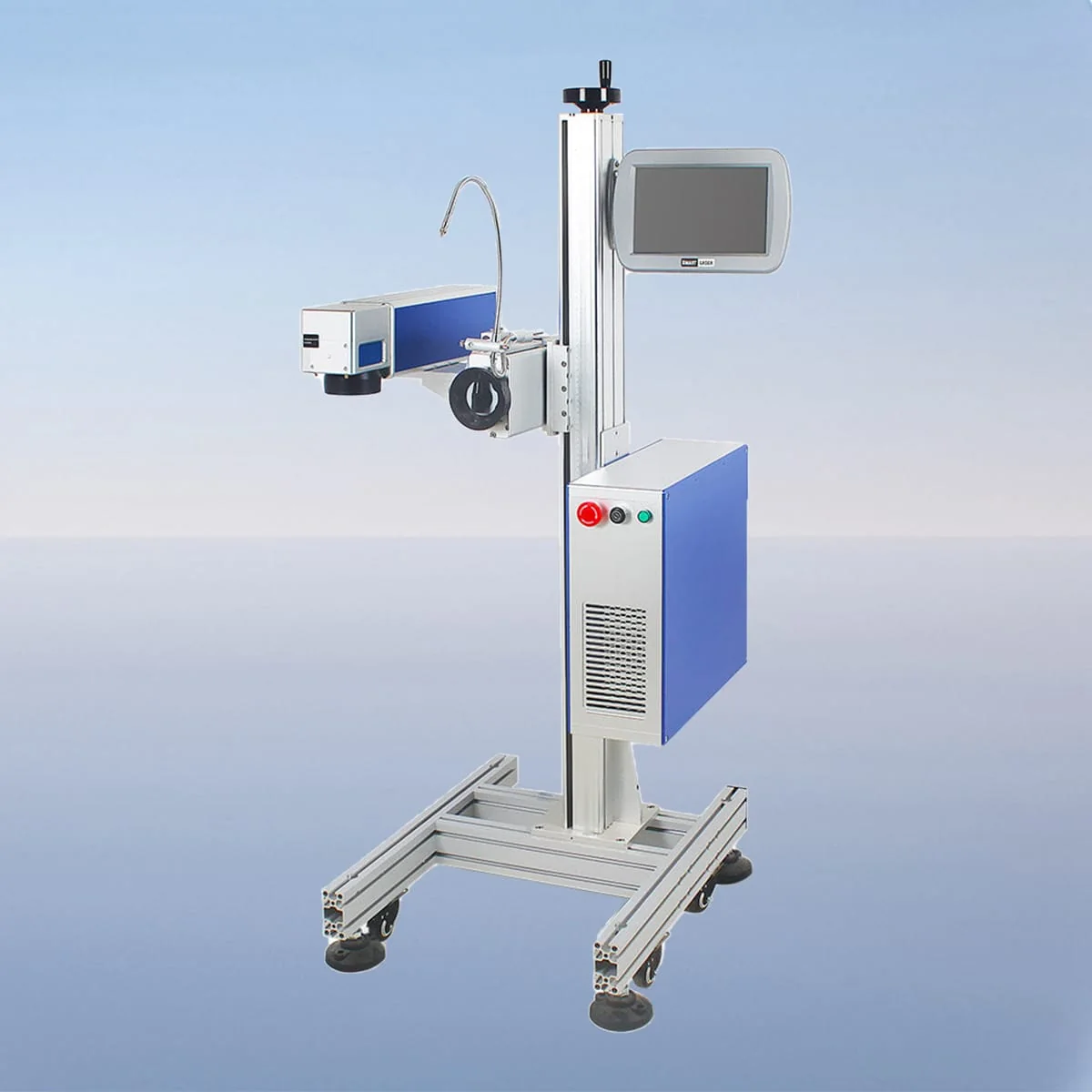
Laser Marking Machine
VIM-FF is a flying fiber laser marking machine series for marking moving products or materials. Its six models run from VIM20FF at 20W to VIM100FF at 100W, with 30W, 50W, 60W and 70W choices between them. The published wavelength is 1080nm across the family.
The flying arrangement places the marking operation in the context of product movement. The configuration includes a fiber generator, air cooling, galvo scanner and field lens, together with red dot positioning and adjustable controls. Selection therefore needs both the artwork and a description of how the product passes the proposed marking position.
Choose an individual model below to view its complete technical specification. The series overview shows selected parameters for comparison.
VIM20FF and VIM30FF are the 20W and 30W entries. The other models are VIM50FF, VIM60FF, VIM70FF and VIM100FF. Raycus and IPG are the named generator options. Keep the source choice and full model in the equipment request; power alone is not a specification of achievable line speed.
The control system allows adjustment of laser power, speed and marking parameters. The galvo scanner and field lens are part of the optical configuration, and a red dot pointer gives a visible reference for alignment. Review their arrangement at the intended marking point together with the product orientation and the space available around it.
The published minimum line width is 10 Microns, and the minimum character dimension is 0.15mm. Those values describe separate fields. They do not assign the field size or guarantee the readability of a particular mark on a moving product. The actual artwork and required result should stay explicit during selection.
The series is positioned for marking continuously moving products or materials on a line. Describe the direction of travel, item spacing and the surface to be marked. Show where the proposed marking point sits relative to existing equipment, and distinguish equipment already installed from any handling items you want included in the proposal.
If the content changes between jobs, provide representative files and explain the required changes. If the same graphic repeats, show its size and position on the product. These descriptions help define the task without presuming a particular data interface, conveyor package or automatic line integration function. No line-speed commitment is assigned here.
Supported graphic formats include bmp, jpg, gif, png, tif, ai, dxf, dst and plt. Use a named format and supply the intended dimensions of the mark. The proposed marking field still needs to be specified for VIM-FF; no field value is copied from a desktop model or another fiber marking series.
The usage environment is listed as clean and dust-free or dust-less. Air cooling is described, along with an interlock that stops operation when a protective door or panel opens. The completed line layout needs its own review of access and the operating arrangement rather than treating individual machine features as certification of the entire installation.
The table's laser module life entry is greater than 100000 hours. It is a published module field, separate from warranty terms and actual service conditions. A complete technical request should unite the selected model, generator, proposed field and controls with the artwork and line layout so the supplied equipment boundary is clear.
They identify the 20W and 30W models in the flying fiber marking family. Both share the published 1080nm wavelength, with Raycus and IPG named as generator options.
The source describes marking moving products or materials. It does not establish a supplied conveyor or complete handling line; identify requested accessories separately in the proposed equipment scope.
No marking-field dimensions are assigned on this page. Request the optical and field configuration for the intended artwork and line arrangement instead of borrowing a value from another series.
No. It is the published minimum character dimension. Provide the actual text size and required readability as part of the marking task, especially when reviewing moving-product placement.
Include product dimensions, material, movement direction, spacing, mark position and artwork. Add a layout and distinguish existing handling equipment from the items requested with the marker.
Share your material, dimensions and process. Start a conversation about the right configuration.